
- Prepare the Ingredients

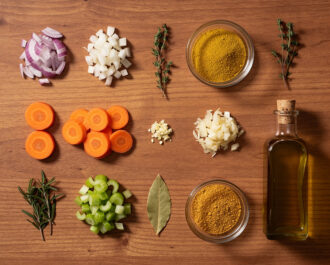
Dice one medium yellow onion, two large carrots, and two large celery stalks. Mince three garlic cloves. Measure out two tablespoons of vegetable bouillon powder (or one tablespoon of paste), six cups of water, two tablespoons of olive oil, and gather your fresh thyme and bay leaf.
- Sauté the Aromatics
Heat the olive oil in a large pot over medium heat. Add the diced onion, carrots, and celery. Cook, stirring occasionally, until the vegetables have softened and the onions become translucent, about 7-8 minutes. Stir in the minced garlic and cook for another minute until fragrant.
- Bloom the Bouillon
Push the vegetables to the side of the pot. Add the vegetable bouillon powder (or paste) directly to the hot spot in the center. Let it cook for about 30 seconds to one minute, stirring constantly, until it becomes very fragrant. This blooming step deepens the flavor.
- Simmer and Serve
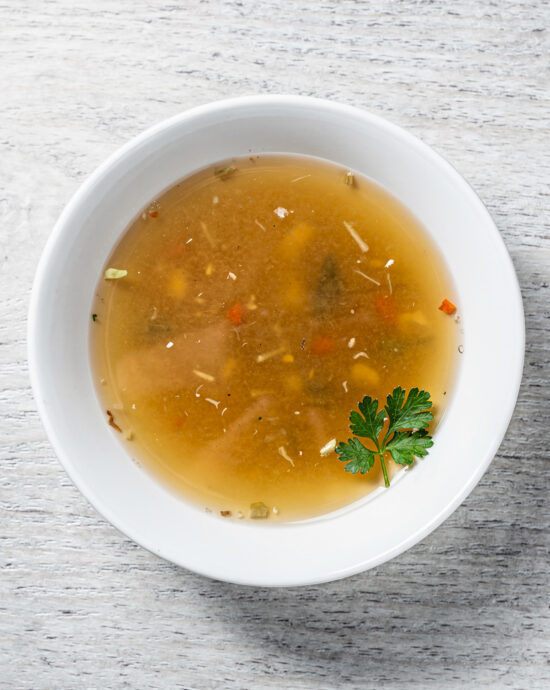
Pour the six cups of water into the pot, scraping up any browned bits from the bottom. Add the thyme sprigs, bay leaf, and black pepper. Bring the mixture to a boil, then reduce the heat to low, cover, and simmer for 10 minutes to let the flavors meld. Remove the thyme stems and bay leaf. Taste and adjust seasoning if needed, then ladle the hot, savory broth into bowls.

- Calories:50 kcal
- Protein:1 g
- Carbohydrates:7 g
- Sugar:3 g
- Salt:1.2 g
- Energy:210 kJ
- Fat:2 g
I was a stubborn skeptic about vegetable bouillon. For years, a dusty jar of beige powder lived in the dark recesses of my pantry, only called into action during a culinary emergency. I assumed it was a flavorless crutch, a shortcut for the uninspired. Then, on a snowy day when I was building a pot of lentil soup, I ran out of my homemade stock. In desperation, I gave that jar a second glance. What I discovered was a secret weapon, a concentrated blast of savory depth that, when used correctly, doesn’t just replace stock—it builds a better, more flavorful foundation.
Why Your Pantry Needs Vegetable Bouillon
Let’s clarify something. We’re not talking about the bland, overly-salty cube of yesteryear. A good vegetable bouillon is a complex layering of roasted carrots, celery, onion, mushrooms, and herbs, dehydrated and ground into a potent powder or pressed into a firm paste. Think of it as the essence of mirepoix, intensified. It’s the culinary equivalent of an orchestra’s warm-up—all those savory notes humming together, ready to create harmony in your pot. This condiment is your backstage pass to flavor town, especially when time is tight but taste is non-negotiable.
Crafting Your Own Savory Paste
If you’re feeling adventurous, you can even make a from-scratch vegetable bouillon paste. It involves pulsing a mountain of fresh veggies and herbs with salt and oil in a food processor until you get a fragrant, spreadable mixture. Packed into a jar, it keeps for weeks in the fridge. A mere teaspoonful, dissolved in hot water, creates an instant, vibrant stock that tastes like you spent hours simmering. It’s a game-changer for risottos, pan sauces, and grain bowls, offering a fresher, brighter flavor profile than its powdered cousin.
The Pro-Tip: Bloom It First
Here’s the ‘Aha!’ moment I wish someone had told me years ago. The biggest mistake you can make is dumping the powder directly into a pot of cool water. To unlock its full potential, you must bloom it. Start your soup or stew by sautéing your aromatics (onions, garlic) in a bit of oil or butter. Once they’re softened, add your measured spoonful of bouillon powder or paste directly into the hot pan. Cook it with the veggies for a minute, letting it sizzle and become fragrant. This gentle toasting deepens the flavors and ensures the mixture dissolves seamlessly into your dish, preventing any grainy texture. Serious Eats has great resources on this technique, which applies to all dried spices and pastes.
Serving & Pairing: Beyond the Bowl
Obviously, a good vegetable bouillon is the quiet hero of any soup. But let’s think bigger. Dissolve a spoonful into the water you use to cook rice, quinoa, or couscous—instant flavor infusion. Whisk it into a simple vinaigrette for a savory punch. Use it to deglaze a pan after searing mushrooms or tofu for a quick, luxurious sauce. As for pairings, a bowl of soup built on this savory base begs for a crusty, buttered slice of sourdough or a flaky biscuit. I love a crisp, dry Riesling alongside, as its acidity cuts through the rich umami beautifully.
Variations & Substitutions
This ingredient is a dream for customisation. Need it gluten-free? Most powders are, but always check the label (or make your own paste). For a soy-free version, avoid pastes that might contain soy sauce or tamari. If you’re watching sodium, look for low-sodium versions or simply use less—you can always add more later. Craving a smoky note? Add a pinch of smoked paprika to the bloomed bouillon. Want it creamier? Stir in a splash of coconut milk or cashew cream at the end. The beauty of this pantry staple is its versatility; it’s a blank canvas for your culinary ideas.
Make-Ahead & Storage Tips
A sealed jar of the powder will last nearly forever in your pantry. Once opened, keep it in a cool, dry spot. For homemade vegetable bouillon paste, store it in a clean jar in the refrigerator for up to 3 weeks, or freeze it in ice cube trays for portion-controlled flavor bombs. Soups made with bouillon base freeze exceptionally well, often tasting even better after a thaw as the flavors meld.
FAQs
Can I use vegetable bouillon paste instead of powder?
Absolutely! The paste is typically more concentrated. Start with half the amount called for in a powder-based recipe and adjust to taste. The key is to dissolve it completely in hot liquid or fat.
Is store-bought vegetable bouillon healthy?
It can be high in sodium, so moderation and label-reading are key. The benefit is its intense flavor, which allows you to use less salt elsewhere in the dish. Making your own paste gives you complete control over the ingredients.
Closing Thoughts
So, I invite you to look at that jar or box in your cupboard with new eyes. It’s not a compromise; it’s a concentrated pocket of possibility. Keep it handy next to your salt and pepper. Once you master the simple act of blooming it, you’ll find yourself reaching for it to elevate weeknight dinners, fortify weekend stews, and add a whisper of savory depth where you least expect it. Now, go warm up a pot and build something delicious. I’d love to hear how you use it in our recipe collection comments!