
- Prepare the Ingredients

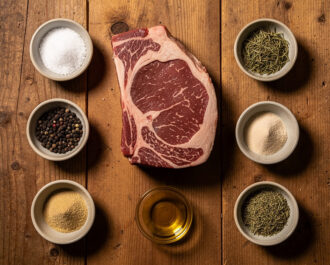
Pat the 5 lb boneless prime rib roast completely dry with paper towels. Place it on a rimmed baking sheet. In a small bowl, combine 2 tbsp coarse kosher salt, 1 tbsp coarsely cracked black pepper, 2 tsp granulated garlic, 1 tsp onion powder, and 1 tsp dried rosemary. Drizzle 1 tbsp of olive oil over the roast and rub it over the entire surface to help the seasoning adhere.
- Season & Rest
Generously coat the entire roast with the prepared spice rub, pressing it into the meat on all sides. For the best flavor, let the seasoned roast sit, uncovered, on a rack in the refrigerator for at least 4 hours, or ideally overnight. This allows the salt to penetrate and the surface to dry, which will promote a better crust.
- Smoke on the Traeger
Preheat your pellet grill to 225°F using a mild wood like cherry or maple. Place the seasoned roast directly on the grill grats, fat side up. Insert a meat probe into the thickest part of the roast, avoiding any large fat pockets. Close the lid and smoke until the internal temperature reaches 120-125°F for medium-rare, which will take approximately 3 to 3.5 hours.
- Sear & Rest
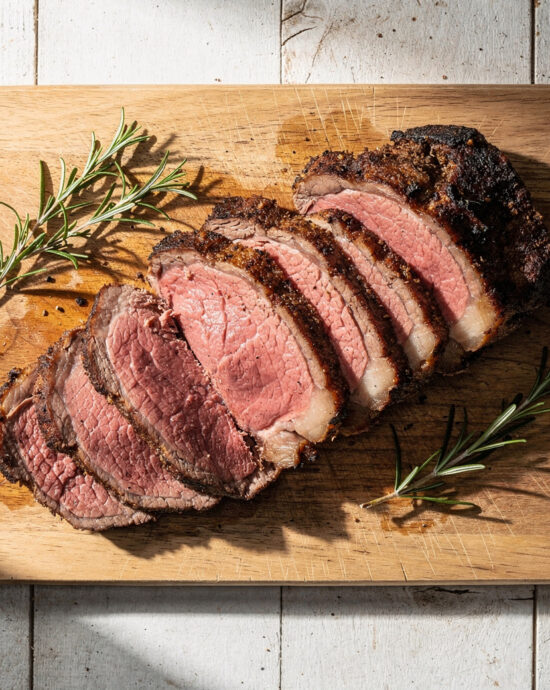
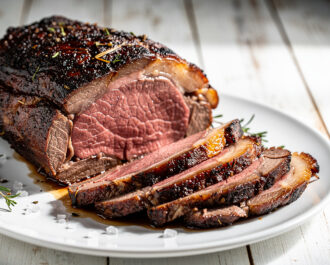
Once the roast hits your target temperature, remove it from the grill and tent it loosely with foil. Increase the Traeger's temperature to its highest setting (450-500°F). When the grill is screaming hot, return the roast for 5-10 minutes to develop a final, deep crust. Remove the roast, place it on a clean cutting board, and let it rest, tented with foil, for a full 25-30 minutes before carving against the grain into thick, beautiful slices.
- Calories:580 kcal
- Protein:52 g
- Carbohydrates:1 g
- Sugar:g
- Salt:1.2 g
- Energy:2427 kJ
- Fat:40 g
Let’s be honest: the quest for a flawless, showstopping prime rib can feel like a high-stakes mission. I used to stress over every degree in the oven. That is, until I discovered the steady, smoky magic of a pellet grill. My journey to perfect this cut led me to one foolproof, spectacularly delicious method. Today, we’re talking about the traeger boneless prime rib—a recipe that delivers a tender, juicy interior hugged by a deeply savory, peppery crust. It’s the centerpiece of your holiday table, with less guesswork than you might think.
A Legend in Its Own Right
Prime rib’s history is rooted in old-world English tradition, where roasting a massive “standing rib” over an open fire was a spectacle of hospitality. Over centuries, the technique evolved. The modern approach, honed by chefs and pitmasters alike, focuses on low-and-slow roasting followed by a high-heat blast. This method, which we’ll use on the pellet grill, ensures that gorgeous pink center from edge to edge.
Why This Traeger Boneless Prime Rib Works
The beauty of this preparation lies in its simplicity and the specific environment a Traeger creates. The consistent, circulating heat from the pellets cooks the roast gently and evenly, avoiding the dreaded gray band. Meanwhile, that steady low temperature renders the fat cap into a luscious, self-basting layer. The real “secret” flavor profile? It’s a trifecta: the pure, beefy essence of the meat, the aromatic woodsy kiss from the smoke, and the bold, savory crust from the rub. You get a symphony of texture: a crackling crust giving way to a slice so tender it barely needs a knife.
The Power of the Right Rub
The right seasoning is non-negotiable. While we’ll provide our favorite blend below, I encourage you to explore different options. For a classic, aromatic route, our recommended traeger prime rib rub recipe uses coarse salt, cracked pepper, garlic, and rosemary. Or, if you want a bolder, more complex flavor, you can adapt a bobby flay prime rib rub recipe, often featuring smoked paprika and coffee, for the pellet grill. It’s all about building a flavor foundation.
The Pro-Tip: The Temperature Rule
My single biggest piece of advice? Trust your thermometer, not the clock. Meat thickness varies, and ambient temperature affects cooking time. A high-quality instant-read probe is your best friend. For perfect medium-rare, pull the roast when the internal temperature reaches 120-125°F. The residual heat will carry it up to 130-135°F while it rests. This rest, by the way, is not optional—it’s when the juices redistribute, ensuring every slice is succulent, not soggy.
Serving & Pairing: Beyond the Basics
This roast is undeniably the star, but its supporting cast matters. While classic sides like creamy horseradish sauce and buttery mashed potatoes are always winners, don’t overlook a bright, acidic contrast. A simple arugula salad with lemon vinaigrette cuts through the richness beautifully. For a truly memorable meal, consider your sauces with prime rib. A silky red wine reduction or a zesty chimichurri can elevate each bite in different ways. Drink pairing? A full-bodied Cabernet Sauvignon is a classic for good reason. However, for something unexpected, a Malbec or a smoky Scotch ale can be fantastic companions.
Variations & Substitutions
This method is wonderfully adaptable. For a bone-in roast, simply add 30-45 minutes to the cook time. If you need to go lower on sodium, use a reduced-sodium salt blend and amp up the herbs. For a different flavor profile, swap the rosemary in our rub for fresh thyme or a touch of ground coriander. As mentioned earlier, feel free to borrow inspiration from other great rubs, like a bobby flay prime rib rub recipe, to make it your own. The key is applying any rub generously and letting it adhere for several hours, or even overnight.
Make-Ahead & Storage Tips
You can season the roast up to 24 hours in advance; wrap it tightly and let it rest in the fridge. This actually improves flavor and texture. After the feast, leftover slices are a treasure. Store them in an airtight container for up to 4 days. Reheat gently in a 250°F oven or on a skillet with a pat of butter to prevent drying out. Thinly sliced leftovers make incredible sandwiches or steak salads. For more make-ahead meal ideas, browse our recipe collection.
FAQs
What wood pellets are best for prime rib?
I prefer a mild, sweet wood like cherry or maple. They provide a subtle smoke flavor that complements, rather than overpowers, the beef. A classic hickory or oak blend also works perfectly.
Can I use a different cut of beef?
Absolutely. The low-and-slow Traeger method works wonders on other roasts like tri-tip or chuck roast. The cook times will vary, but the principle of cooking to temperature remains the same. For more detailed science on cooking meats, Serious Eats is a fantastic resource.
How do I get a better crust (bark)?
Make sure your roast is very dry before applying the rub. Pat it thoroughly with paper towels. Also, don’t be shy with the coarse black pepper—it’s essential for that signature texture.
So there you have it. This isn’t just a recipe; it’s a roadmap to confidence. Fire up your grill, take a deep breath of that smoky air, and get ready to serve a masterpiece. I promise, the look on your guests’ faces will be worth every minute. Now, go make some memories—and tell me how it goes in the comments!