
- Prepare the Ingredients

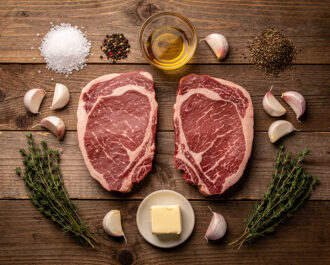
Pat both steaks completely dry with paper towels. Season all over with the kosher salt and black pepper. Let them sit at room temperature for 30 minutes while you smash the garlic cloves and gather the thyme sprigs and butter.
- Sear the Steak
Heat a heavy cast-iron or stainless-steel skillet over medium-high heat until very hot, about 3-4 minutes. Add the oil and swirl to coat. Carefully add the steaks. Cook undisturbed for 4-5 minutes, until a deep brown crust forms on the bottom.
- Flip and Baste
Flip the steaks using tongs. Immediately add the butter, smashed garlic, and thyme to the pan. As the butter melts, tilt the pan and spoon the foaming butter continuously over the steaks for 3-4 minutes for medium-rare (130-135°F internal temperature).
- Rest and Serve
Transfer the steaks to a cutting board or plate. Let them rest for 5-7 minutes to allow the juices to redistribute. Pour the flavorful butter from the pan over the top before slicing against the grain and serving immediately.
- Calories:520 kcal
- Protein:48 g
- Carbohydrates:2 g
- Sugar:g
- Salt:1.2 g
- Energy:2175 kJ
- Fat:36 g
We all have that one specific craving: the kind that feels less like hunger and more like a deep, soulful need. For me, it’s often the primal sizzle of beef meeting a hot pan, the aroma of garlic blooming in butter, and the promise of a tender, juicy slice. There’s a special brand of comfort in mastering great steak recipes at home, ones that are surprisingly simple yet deliver restaurant-level results without the fuss. This particular skillet method is my weeknight champion—a reliable, quick, and deeply satisfying route from pan to plate in under 20 minutes.
The Story Behind These Steak Recipes
This isn’t a stuffy, pedigreed French technique or a complicated sous-vide ritual. It’s the pure, unadulterated wisdom of the American home cook—the kind of method born from wanting something substantial and perfect without needing a grill or a culinary degree. I used to think a great crust was reserved for steakhouses with 1800-degree broilers. My “Aha!” moment came when I stopped moving the steak around and just let the pan do its work. Patience, not horsepower, is the real secret here.
What Makes This Method Special
This approach is all about achieving that beautiful, savory crust while keeping the interior a perfect medium-rare. The magic lies in a dry brine with salt, a screaming-hot cast iron or stainless steel skillet, and a final, flavorful baste with butter, garlic, and herbs. The result is a steak with a crackly, almost candied exterior and a melt-in-your-mouth center. The basting sauce, rich with toasted aromatics, becomes an instant, luxurious pan sauce you’ll want to spoon over everything.
The Non-Negotiable Pro-Tip for Steak Recipes
Your steak must be bone-dry before it hits the pan. After patting it thoroughly with paper towels, let it sit uncovered in the fridge for 30-60 minutes. This dries the surface even more, which is critical for that glorious sear. Moisture is the enemy of browning; it creates steam and you’ll end up boiling your beef instead of searing it. A dry steak in a hot pan is the single most important step for these kinds of pan-seared steak recipes.
Serving & Pairing: Think Beyond the Baked Potato
While a classic baked potato is never wrong, I love slicing this steak thinly and draping it over a simple arugula salad with shaved Parmesan and a lemon vinaigrette. The peppery greens and sharp cheese cut through the richness beautifully. For a heartier side, try crispy smashed potatoes or a quick sauté of mushrooms. Drink-wise, a bold Cabernet Sauvignon is a classic partner, but a dry, malty Belgian ale also works wonders.
Variations & Swaps
No fresh thyme? Rosemary or even a pinch of dried oregano works. For a dairy-free version, use a high-smoke-point oil like avocado oil for the baste instead of butter, and add a smashed garlic clove for flavor. If you’re looking for a leaner cut, try a filet mignon, but reduce the cooking time slightly. Want a kick? Add a pinch of red pepper flakes to the butter baste.
Make-Ahead & Storage Wisdom
You can dry-brine your steaks up to 24 hours in advance—just leave them on a rack in the fridge uncovered. Leftover cooked steak is a treasure! Store it sliced in an airtight container for up to 3 days. It’s fantastic cold in salads, chopped into scrambled eggs, or gently warmed and tucked into a sandwich. For more inspiration on using leftovers, browse our recipe collection.
Your Steak Recipes FAQs
What if I don’t have a cast iron skillet? Any heavy-bottomed skillet (stainless steel works great) will do. The key is getting it very hot and not crowding the pan.
How do I know when it’s done? I highly recommend using an instant-read thermometer. For medium-rare, aim for 130-135°F internally. Serious Eats has an excellent guide to steak temperatures if you need a visual reference.
So, there you have it. My unfussy, utterly reliable path to a phenomenal steak dinner. It’s one of those foundational techniques that builds kitchen confidence. Now, go preheat that skillet. I promise the sizzle, the smell, and that first perfect bite will be its own reward. Tell me how it goes in the comments!