
- Prepare the Ingredients

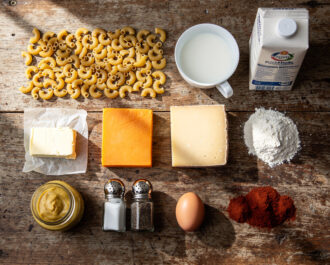
Bring a large pot of salted water to a boil for the pasta. While it heats, grate the cheddar and gruyère cheeses and set them aside in a bowl. In a small bowl, lightly beat the egg. Measure out all other ingredients—butter, flour, milk, mustard, salt, pepper, and paprika.
- Cook the Pasta and Make the Roux
Cook the macaroni according to package directions until al dente, then drain and set aside. Meanwhile, in a large Dutch oven or heavy-bottomed pot, melt the butter over medium heat. Whisk in the flour and cook, stirring constantly, for about 2 minutes until the mixture is golden and fragrant.
- Build the Cheese Sauce
Gradually whisk in the milk, ensuring no lumps remain. Bring the sauce to a gentle simmer, whisking frequently, until it thickens enough to coat the back of a spoon, about 5-7 minutes. Remove from heat. Temper the egg by whisking a ladle of the hot sauce into the beaten egg, then stream the egg mixture back into the pot.
- Combine and Finish
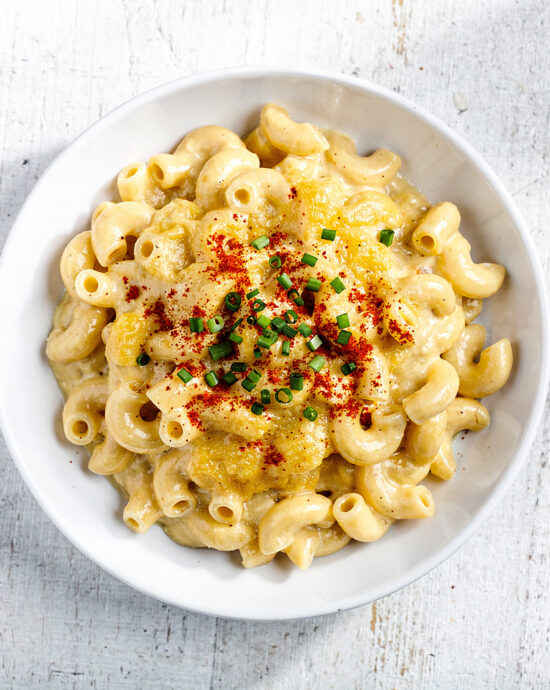
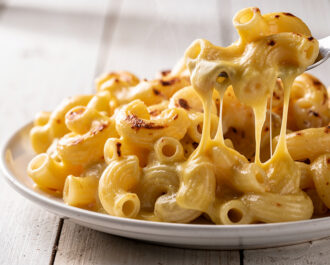
Stir in the Dijon mustard, salt, pepper, and paprika. Add the shredded cheeses one handful at a time, stirring until completely melted and smooth. Fold in the cooked, drained macaroni until every piece is gloriously coated in the creamy sauce. Taste and adjust seasoning. Serve immediately while hot and gooey.
- Calories:580 kcal
- Protein:25 g
- Carbohydrates:62 g
- Sugar:8 g
- Salt:1.1 g
- Energy:2427 kJ
- Fat:28 g
Sometimes, the call for gooey, comforting pasta is deafening, and only a truly excellent mac and cheese recipe will do. Forget the boxed stuff; this homemade version builds a flavor so deep and a sauce so lusciously clingy, it will ruin you for all others. It’s the kind of stovetop mac and cheese you dream about. Let’s make it.
The Quest for the Best Mac and Cheese Recipe
The story of macaroni and cheese is a surprisingly old and noble one, tracing back to 13th-century Italy before Thomas Jefferson popularized it stateside. My version is a love letter to that lineage—simple, honest, and focused entirely on the cheese. I spent years chasing the perfect, creamy mac and cheese recipe, and this one nails it every time.
Why This Stovetop Method Wins
What sets this dish apart? It’s all about the roux and the cheese selection. We start with a butter-and-flour base cooked just long enough to lose its raw flour taste, then whisk in milk to create a béchamel so silky it drapes over a spoon. The magic happens when we stir in a blend of sharp cheddar for punch and gruyère for nutty depth. The result is a sauce that’s rich but not heavy, creamy without being gluey.
The Pro-Tip: Temper, Don’t Scramble
My one non-negotiable piece of advice? Temper your eggs. When adding beaten eggs to a warm sauce, you must whisk in a small ladleful of the hot mixture first to gently warm the eggs. Then, you can stream the now-warmed eggs back into the main pot without risk of curdling. This trick, detailed on Serious Eats, ensures a velvety, stable emulsion every single time.
Serving & Pairing: Think Beyond the Bowl
This is a star side dish, but it can easily be the main event. I love pairing a bowl with a simple, bright arugula salad dressed in lemon vinaigrette to cut through the richness. For drinks, a crisp lager or a dry cider works wonders. Want to go all out? Top individual servings with buttery breadcrumbs and broil for that perfect, golden crust. It’s my go-to simple mac and cheese recipe for potlucks and game days alike.
Variations & Substitutions
The beauty of a classic like this is its adaptability. For a super creamy mac and cheese, swap half the cheddar for Velveeta. Feeling fancy? Try Ina Garten’s method and add a hint of nutmeg. For a healthier mac and cheese recipe, use whole-wheat pasta and swap in low-fat milk and sharp, reduced-fat cheddar—the flavor will still be fantastic. You can even make this an old fashioned macaroni and cheese recipe by baking it with a crispy panko topping.
Make-Ahead & Storage Tips
This dish reheats beautifully. Let it cool completely, store it in an airtight container in the fridge for up to 3 days, and gently reheat on the stove with a splash of milk to loosen the sauce. It also freezes well for up to a month; just thaw overnight in the fridge before reheating.
Your Mac and Cheese FAQs
Can I use pre-shredded cheese? I don’t recommend it. The anti-caking agents can make your sauce grainy. Block cheese you grate yourself melts far more smoothly, making it the best mac and cheese recipe choice.
My sauce is too thick. Help! No worries! Simply whisk in a little extra warm milk, a tablespoon at a time, until it reaches your desired consistency. It’s an easy fix.
What’s the secret to avoiding blandness? Season generously! Don’t forget to salt your pasta water, and always taste and adjust the final sauce with salt, pepper, and a pinch of mustard powder for complexity.
There you have it—my ultimate, soul-warming, from-scratch masterpiece. It’s more than just a meal; it’s a hug in a bowl. Now, grab your whisk and get cooking. I’d love to hear how yours turns out in the comments! For more comforting classics, browse our recipe collection.