
- Prepare the Ingredients

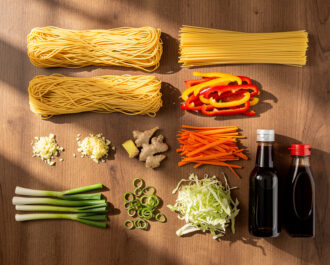
Cook the lo mein egg noodles according to package directions until al dente, then drain and rinse briefly with cool water to stop cooking. Toss with 1 tsp of vegetable oil to prevent sticking. In a small bowl, whisk together the soy sauce, oyster sauce, toasted sesame oil, sugar, and black pepper to make your lo mein sauce. Prepare all vegetables: mince the garlic and ginger, julienne the carrot, slice the bell pepper and cabbage, and slice the green onions, keeping the white and green parts separate.
- Stir-Fry the Aromatics & Veggies
Heat the remaining vegetable oil in a large wok or skillet over high heat until shimmering. Add the garlic, ginger, and the white parts of the green onions. Stir-fry for 30 seconds until fragrant. Add the carrot and bell pepper, and stir-fry for 2-3 minutes until they begin to soften. Then, add the cabbage and continue to cook for another 2 minutes, tossing frequently, until all vegetables are crisp-tender.
- Combine Noodles & Sauce
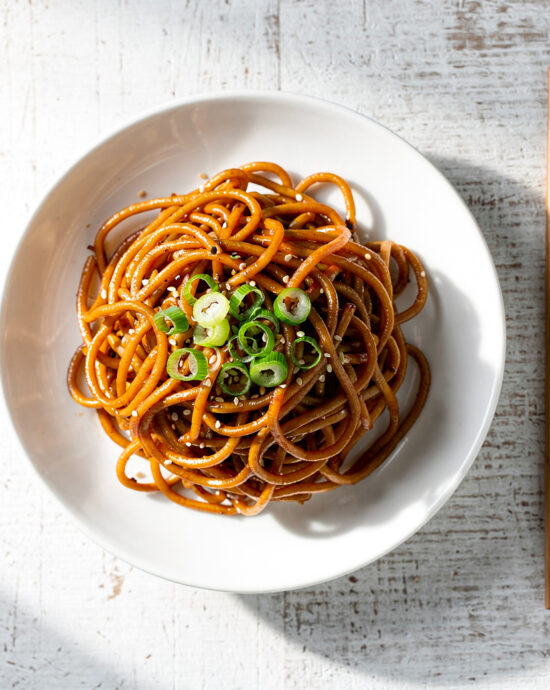
Reduce heat to medium-high. Add the cooked, drained noodles to the wok with the vegetables. Pour the prepared sauce over everything. Using a pair of tongs or two spatulas, toss and fold everything together vigorously for 1-2 minutes, ensuring every strand of noodle is coated in the glossy sauce and the vegetables are evenly distributed.
- Finish and Serve
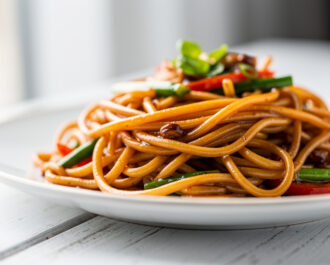
Once the sauce is clinging to the noodles and everything is heated through, remove the wok from the heat. Taste and adjust seasoning if needed. Transfer to a serving platter or bowl. Garnish generously with the reserved green onion tops and a sprinkle of toasted sesame seeds. Serve immediately while hot and wonderfully slurpable.
- Calories:380 kcal
- Protein:10 g
- Carbohydrates:58 g
- Sugar:8 g
- Salt:1.4 g
- Energy:1590 kJ
- Fat:12 g
There’s a certain magic in the sound of that first soft slurp of fresh lo mein noodles—the perfect amount of chewy resistance, the way each strand clings to a glossy, savory-sweet sauce. I used to think this was something only my local joint could get right, a special secret reserved for takeout boxes. But I’m here to tell you, that’s a delicious myth. With just a few pantry staples, you can achieve that signature texture and flavor right on your own stovetop. This isn’t about being fancy; it’s about capturing a specific craving. That perfect bite of lo mein is not only achievable but becomes a ridiculously easy go-to weeknight victory.
The Humble, Mighty History of Lo Mein Noodles
The name says it all: “lo mein” translates to “tossed noodles.” It’s a Cantonese classic that likely traveled to American shores with immigrants, evolving into the beloved, saucy staple we know today. While its origins are humble, its appeal is legendary—a perfect canvas for whatever protein and vegetables you have on hand, all bound together by that glorious sauce.
Why Your Sauce Is the Hero
What makes this dish special isn’t a laundry list of obscure ingredients; it’s the balance in the sauce. A great lo mein sauce has layers: the salty depth of soy sauce, the round sweetness of oyster sauce (or a vegan alternative), a touch of aromatic sesame oil, and a whisper of sugar to harmonize it all. The magic happens when this mixture emulsifies with the starch from the noodles, coating every single strand without being greasy or watery.
The One Pro-Tip You Absolutely Need
My “aha!” moment came from a brilliant article on Serious Eats: don’t drown your noodles. The key is a hot wok or skillet and working in batches if needed. You want to sear and slightly char your vegetables and protein, not steam them. Then, when you add your cooked noodles and sauce, toss everything aggressively over high heat for just 60-90 seconds. This quick, fiery dance is what gives the dish its signature ‘wok hei’ or breath of the wok—that smoky, restaurant-quality essence.
Serving & Pairing Your Perfect Lo Mein Noodles
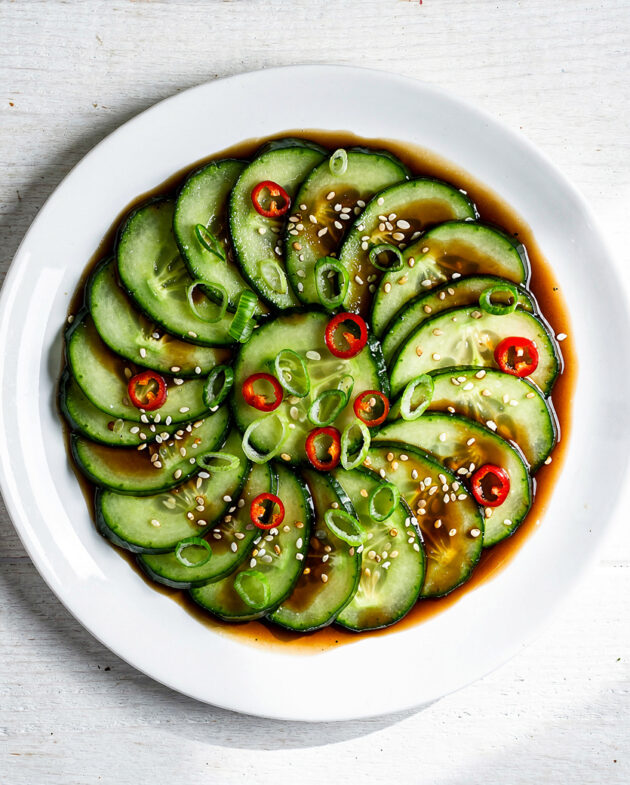
I love serving this family-style, right from the wok into a big, shallow bowl. A final scatter of sliced green onions and a sprinkle of toasted sesame seeds is the only garnish it needs. For a drink, a crisp, cold lager cuts through the richness beautifully, or try a slightly sweet iced jasmine tea. An unexpected but fantastic side is a simple, vinegary cucumber salad—its bright crunch is the perfect counterpoint to the savory, umami-packed noodles.
Endless Variations & Clever Swaps
The beauty of this template is its flexibility. Craving a simple chicken lo mein? Swap in thinly sliced breast or thigh. For a shrimp lo mein, add plump shrimp in the last minute of cooking. Want a vegetable lo mein? Load it up with bok choy, bell peppers, and mushrooms—the vegetable lo mein sauce works wonders. For a vegan lo mein, use mushroom stir-fry sauce instead of oyster sauce and toss in baked tofu. You can even make gluten free lo mein by using tamari and rice-based noodles. This truly is an easy lo mein recipe that adapts to you.
Make-Ahead & Storage Smarts
The sauce can be mixed and refrigerated for up to a week. Chop all your veggies in advance and store them in containers for a truly simple lo mein recipe on a busy night. Leftovers keep well in the fridge for 2-3 days, though the noodles will soften. Reheat in a lightly oiled skillet over medium heat, adding a tiny splash of water to loosen the sauce.
Your Lo Mein Questions, Answered
Can I use spaghetti for lo mein noodles? In a pinch, yes! Spaghetti or linguine can stand in, but for the authentic chewy texture, seek out fresh or dried lo mein egg noodles in the Asian aisle.
My sauce turned out too salty. How do I fix it? Balance is key. Next time, use low-sodium soy sauce. To rescue a batch that’s too salty, stir in a teaspoon of sugar or a splash of water and a squeeze of fresh lime juice.
What’s the secret to not getting soggy lo mein noodles vegetables? High heat and speed. Cook your vegetables just until crisp-tender before adding the noodles and sauce. They should still have a bit of bite.
So, what are you waiting for? Grab your wok (or your trustiest skillet), and let’s turn your kitchen into the best Chinese takeout spot in town. I promise, once you get the rhythm of this lo mein sauce recipe, you’ll be whipping up lo mein noodle dishes on the regular. Now, go make some magic—and don’t forget to tell me how it went in the comments! For more inspiration, browse our recipe collection.