
- Prepare the Ingredients

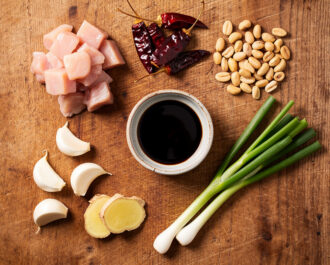
Cut the chicken into 1-inch cubes. In a bowl, combine 1 tbsp soy sauce, Shaoxing wine, and 1 tbsp cornstarch. Add chicken, toss to coat, and set aside to marinate for 15 minutes. Meanwhile, whisk together all sauce ingredients (2 tbsp soy sauce, black vinegar, hoisin, sugar, chili paste, 2 tsp cornstarch, and 2 tbsp water) in a small bowl until smooth. Mince garlic and ginger, slice green onions (keeping whites and greens separate), and measure out peanuts, dried chiles, and Sichuan peppercorns.
- Stir-Fry the Aromatics
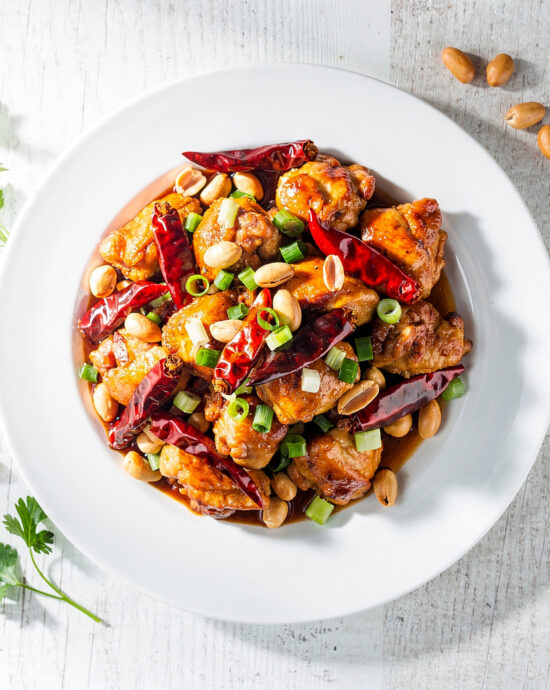
Heat a wok or large skillet over high heat until very hot. Add 2 tbsp oil and swirl to coat. Add the dried chiles and Sichuan peppercorns. Stir-fry for 30 seconds until fragrant and the chiles darken slightly, being careful not to burn them. Add the minced garlic, ginger, and the white parts of the green onions. Stir-fry for another 30 seconds until incredibly fragrant.
- Cook the Chicken
Push the aromatics to the side of the wok. Add the remaining 1 tbsp oil to the center. Add the marinated chicken in a single layer and let it sear undisturbed for 1 minute to develop color. Then, toss and stir-fry vigorously for 3-4 minutes until the chicken is cooked through and nicely browned on the outside.
- Combine & Finish the Dish
Give the prepared sauce a quick re-stir (the cornstarch may have settled) and pour it into the wok, aiming for the hottest part. Immediately toss everything together—the chicken, aromatics, and sauce. The sauce will thicken rapidly into a glossy coat within 30-60 seconds. Remove from heat. Stir in the roasted peanuts and the green onion greens. Toss one final time to combine, then transfer immediately to a serving plate.
- Calories:420 kcal
- Protein:38 g
- Carbohydrates:15 g
- Sugar:6 g
- Salt:2 g
- Energy:1757 kJ
- Fat:23 g
There’s a particular craving that hits me when I’m after something bracing, satisfying, and just plain fun to eat. It’s not a whisper; it’s a declaration. My mind goes straight to the glorious chaos of a sizzling wok, the scent of peanuts toasting, and the unmistakable hit of Sichuan peppercorn. This craving has a name: kung pao chicken. It’s the takeout classic that deserves a permanent spot in your weeknight rotation.
The Legend Behind the Dish
Named after Ding Baozhen, a Qing Dynasty governor, this dish has the kind of origin story you can imagine being passed down for generations. Ding loved spicy, flavorful food, and his creation became a standard bearer for the bold, complex flavors of Sichuan cuisine. It traveled the world, becoming arguably one of the most famous Chinese dishes, even if it sometimes lost its fiery soul along the way.
What Makes This Kung Pao Chicken Recipe Special
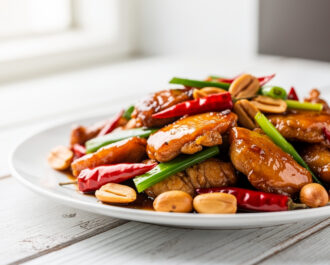
This isn’t a gloppy, overly sweet imitation. My goal is to capture the thrilling balance that defines a proper Sichuan kung pao chicken: the savory depth of the marinade, the bright, vinegary punch of the sauce clinging to crispy chicken, the toasty crunch of peanuts, and that lingering, tingling warmth from Sichuan peppercorns. The texture is everything—tender inside, with a slight chew from the velveting process.
The Sauce: Your Flavor Foundation
Forget bottled stuff. The magic happens when you whisk together soy sauce, Chinese black vinegar, a touch of sugar, and a spoonful of chili paste. This kung pao chicken sauce recipe is the soul of the dish. Its simplicity is deceptive; it creates that addictive sweet, sour, salty, and spicy harmony in every bite.
One Non-Negotiable Pro-Tip
Here’s the game-changer I learned from Serious Eats: Mise en place. Have every ingredient prepped, measured, and lined up by your stove. A kung pao chicken stir fry comes together in minutes over blazing heat. If you’re rummaging for the vinegar while your peanuts burn, the delicate balance is lost. Organization is your secret weapon for restaurant-quality results at home.
Serving & The Perfect Pairing
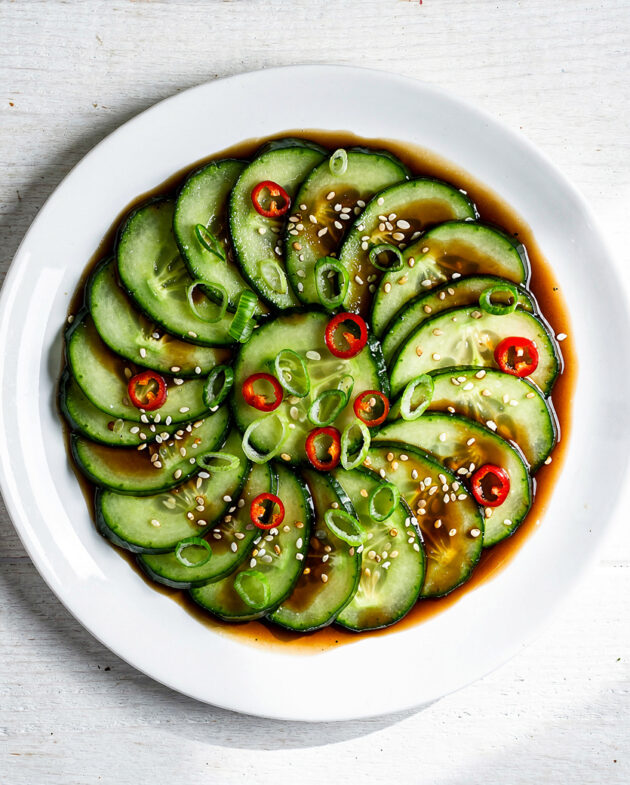
Serve this glorious mess straight from the wok over a mound of steaming jasmine rice—it’s the ideal vehicle to soak up every last drop of sauce. For a drink pairing, skip the heavy beer and try a crisp, off-dry Riesling. Its sweetness tempers the heat, and its acidity cuts through the richness beautifully. A simple cucumber salad on the side provides a cool, refreshing contrast.
Variations & Substitutions
This recipe is wonderfully adaptable! For a kung pao chicken recipe simple and fast, use store-bought roasted peanuts and skip the Sichuan peppercorns (though you’ll miss the *ma la* tingle). Love the convenience of a kung pao chicken instant pot? Sear the chicken using the sauté function, then add the sauce and pressure cook for a few minutes to infuse the flavors. Looking for a kung pao chicken recipe with Panda Express sauce vibe? Increase the sugar slightly and use a milder chili-garlic sauce. For a kung pao chicken seasoning mix shortcut, combine equal parts soy powder, sugar, ground ginger, and white pepper, but a from-scratch sauce is superior. Vegetarian? Swap the chicken for pressed, cubed firm tofu or seitan.
Make-Ahead & Storage Tips
You can marinate the chicken up to 24 hours ahead. The sauce can be whisked together and refrigerated for a week. Leftovers keep well in the fridge for 3-4 days, though the peanuts will soften. Reheat gently in a skillet to restore some crispness.
Your Kung Pao Chicken FAQs
Can I make it less spicy?
Absolutely. Reduce or omit the dried chiles and chili paste. The dish will still be incredibly flavorful from the black vinegar and soy.
What’s the best substitute for Chinese black vinegar?
A combination of rice vinegar and a tiny splash of balsamic vinegar gets you close. Or, check out our recipe collection for more sauce ideas.
Is this an authentic kung pao chicken recipe?
This version stays true to the core Sichuan principles—the *ma la* sensation, the balance of flavors, and the technique. It’s a fantastic home-cooked version of the classic.
Ready to Wok and Roll?
So, tie on your apron and fire up that burner. Making kung pao chicken is a thrilling little kitchen adventure that rewards you with a bowl of pure, unadulterated joy. Once you taste the vibrant, layered flavors of your own creation, that takeout menu might just find a new home in the recycling bin. Now, go make some noise in that wok—I’d love to hear how it turns out in the comments!