

- Prepare the Ingredients

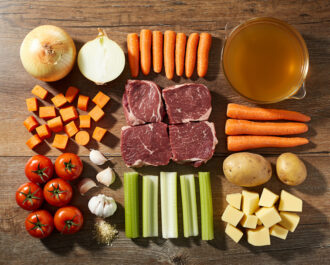
Pat the 2 lbs of beef chuck roast dry with paper towels and cut it into 1-inch cubes. Season generously with 1.5 tsp kosher salt and 1 tsp black pepper. Chop the onion, slice the carrots and celery, mince the garlic, peel and cube the potatoes, and measure out all remaining ingredients.
- Sear the Beef
Heat 1 tbsp olive oil in a large Dutch oven or heavy pot over medium-high heat. Working in batches to avoid crowding, add the beef cubes in a single layer. Sear without moving for 3-4 minutes per side until deeply browned. Transfer the seared beef to a plate and repeat with remaining beef, adding more oil as needed.
- Build the Flavor Base
Reduce heat to medium. Add the remaining 1 tbsp oil to the pot. Add the onion, carrots, and celery. Cook, stirring occasionally, for 6-8 minutes until softened. Add the garlic and tomato paste, cooking for 1 more minute until fragrant. Pour in a splash of beef broth to deglaze the pot, scraping up all the browned bits from the bottom.
- Simmer to Perfection
Return the seared beef and any accumulated juices to the pot. Add the diced tomatoes with their juices, remaining beef broth, dried thyme, and bay leaves. Bring to a boil, then reduce heat to low, cover, and simmer gently for 1 hour and 15 minutes.
- Add Vegetables and Finish
Stir in the cubed potatoes. Cover and continue simmering for 30-35 minutes, or until the potatoes and beef are fork-tender. Add the frozen green beans and corn, cooking for a final 5-7 minutes until heated through. Discard the bay leaves. Stir in the fresh parsley, then taste and adjust seasoning with additional salt and pepper if needed.

- Calories:385 kcal
- Protein:35 g
- Carbohydrates:32 g
- Sugar:8 g
- Salt:1.2 g
- Energy:1610 kJ
- Fat:14 g
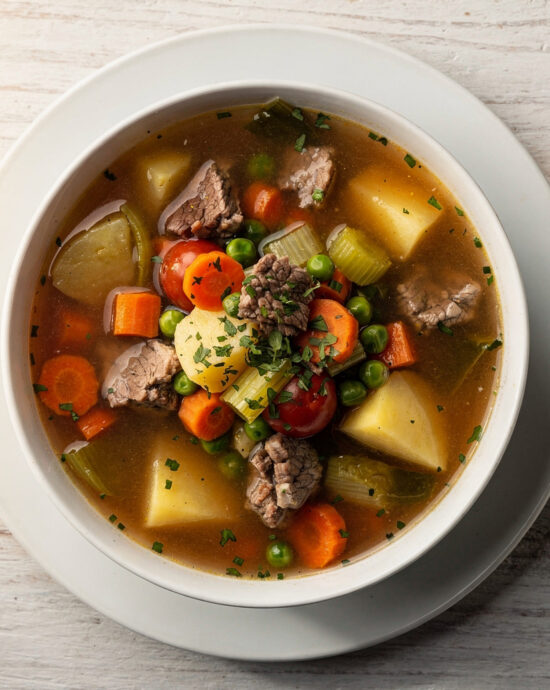
On those evenings when the wind nips just a little too sharply at the door and all you crave is a bowl of something restorative, a robust homemade vegetable beef soup is what you want simmering away on your stove. Forget the pale, overly salty imitations from a can; this recipe is the real deal. It’s an exercise in patience and love that fills your kitchen with an aroma so comforting, it feels like a hug. I promise, once you’ve tasted this deeply savory, chunky soup where every vegetable and morsel of beef is cooked to perfect tenderness, you’ll never go back.
The Story Behind This Bowl of Comfort
The lineage of a good vegetable beef soup is folk wisdom at its finest. It’s the clever cook’s way of turning humble, hearty ingredients—a tough cut of meat, winter cellar vegetables, a long-cooking liquid—into a pot of gold. Every family and every region has its own twist, from a classic beef noodle tomato soup to versions thickened with potatoes. This recipe is my personal amalgam of those traditions, honed over many winters until it landed right here, in your virtual kitchen. The goal is simple: deep flavor in every spoonful.
What Makes a Great Beef Soup Tomato
This isn’t just a pot of boiled ingredients; it’s a carefully constructed layering of flavors. The magic starts by browning the beef, which creates a fond—those delicious browned bits on the bottom of the pot—that becomes the foundation of the broth’s rich character. From there, we build with aromatic vegetables and a base of broth and tomato, simmering it all until the meat is impossibly tender and the vegetables are soft but not mushy. The result is a soup with a complex, savory-sweet broth, thanks in part to using a vegetable beef soup with tomato juice recipe as inspiration for the liquid base.
The Pro-Tip: Sear with Patience
Here’s the secret that transformed my soup-making forever: don’t crowd the beef when you sear it. This was my ‘Aha!’ moment. If you dump all the cubes into the pot at once, they’ll steam instead of sear. Working in batches ensures each piece gets a proper, caramelized crust. Those browned bits are pure, concentrated flavor. Deglazing the pot with a splash of broth or even water to scrape them up is a non-negotiable step. Trust me, this patience pays dividends in the final bowl.
Homemade Vegetable Beef Soup: Serving & Pairing
This soul-warming creation is a meal in itself, especially with a thick slice of crusty, buttered bread or a flaky biscuit for dipping. For a fun twist, think of it as a deconstructed pot pie and serve it over a warm, buttery biscuit. A simple green salad with a bright vinaigrette cuts through the richness beautifully. As for a drink? A robust red wine like a Malbec or even a crisp, malty lager works wonders.
Variations & Clever Substitutions
The beauty of a recipe like this is its flexibility. Don’t have stew meat? Use ground beef, browning it well before adding the vegetables. For a heartier beef soup tomato vibe, add a cup or two of wide egg noodles in the last 10 minutes of cooking. You can make a version of tomato soup with beef by using a can of condensed tomato soup as part of the liquid base. If you’re out of canned tomatoes, using V8 or tomato juice as in a vegetable beef soup with tomato soup substitute adds a lovely tang. Gluten-free? Skip any noodles and add extra root vegetables. For a low-carb option, swap potatoes for turnips or radishes.
Make-Ahead & Storage Wisdom
This stew is arguably even better the next day, as the flavors continue to meld. Let it cool completely, then store it in an airtight container in the refrigerator for up to 4 days. It also freezes exceptionally well for up to 3 months. To reheat, thaw overnight in the fridge (if frozen) and warm gently on the stovetop, adding a splash of broth or water if it has thickened too much.
Your Soup Questions, Answered
Can I make this in a slow cooker? Absolutely! After browning the beef and sautéing the onions (a step I highly recommend for flavor), transfer everything to your slow cooker and cook on LOW for 7-8 hours or HIGH for 4-5 hours.
What cut of beef is best? Chuck roast is my go-to. It has great marbling that breaks down into tender, flavorful strands during the long, slow cook. Round roast is a leaner but still good option.
My soup tastes a bit flat. How can I fix it? Don’t underestimate the power of salt and acid. Season well with salt and black pepper at the end. A splash of red wine vinegar or a squeeze of fresh lemon juice just before serving can lift all the flavors dramatically. For more science-backed cooking tips, check out the brilliant guides on Serious Eats.
So there you have it—your blueprint for the ultimate, soul-satisfying bowl. This homemade vegetable beef soup is more than a recipe; it’s a kitchen ritual that yields warmth, nourishment, and a deep sense of accomplishment. Now, grab your favorite heavy-bottomed pot, roll up your sleeves, and let’s get cooking. I can’t wait to hear how yours turns out, so be sure to tell me in the comments. Happy simmering!