

- Prepare the Ingredients

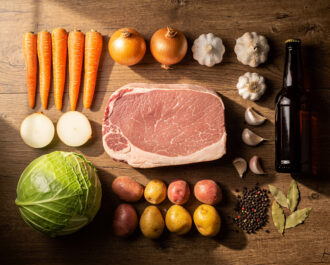
Rinse the corned beef brisket under cold water. Peel and quarter the onions, smash the garlic cloves, peel and chunk the carrots, and cut the potatoes and cabbage. Measure out the beer, water, peppercorns, and bay leaves. Have the spice packet from the brisket ready.
- Simmer the Brisket
Place the rinsed brisket in a large Dutch oven or heavy pot. Add the cold water and beer—the liquid should just cover the meat. Add the onions, garlic, bay leaves, peppercorns, and the contents of the spice packet. Bring to a boil over high heat, then immediately reduce to a very low, gentle simmer. Cover and cook for 2.5 hours.
- Add the Root Vegetables
After 2.5 hours, carefully add the carrots and potatoes to the pot, submerging them in the broth. If needed, add a bit more hot water to keep everything covered. Return to a simmer, cover, and cook for 30 minutes more.
- Cook the Cabbage and Rest
Gently place the cabbage wedges on top of the other ingredients. Cover and simmer for an additional 15-20 minutes, until the cabbage is tender. Using tongs, carefully transfer the brisket to a cutting board, tent it with foil, and let it rest for 15 minutes before slicing thinly against the grain.
- Serve and Enjoy
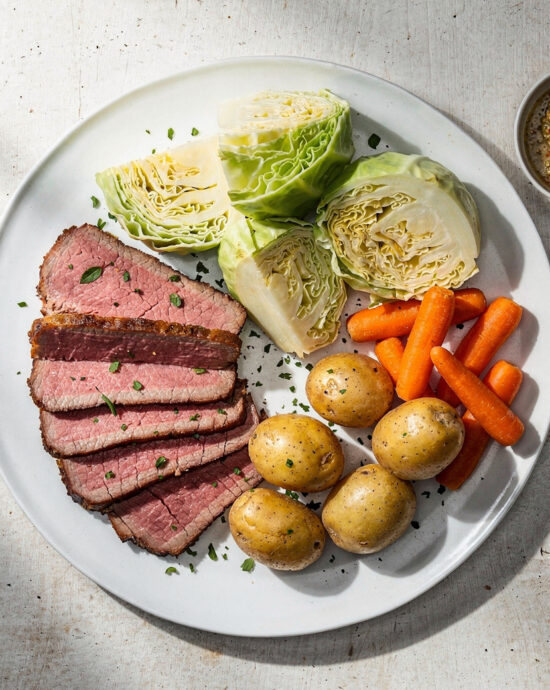
Use a slotted spoon to arrange the vegetables on a large warm platter. Slice the rested corned beef and arrange it over the vegetables. Ladle a little of the hot cooking broth over everything. Serve immediately with grainy mustard on the side.
- Calories:520 kcal
- Protein:38 g
- Carbohydrates:42 g
- Sugar:10 g
- Salt:2.1 g
- Energy:2175 kJ
- Fat:22 g
There’s a certain chill in the air, or maybe it’s just the nostalgia of the calendar page turning, that makes me crave something deeply comforting, something that simmers for hours until your house smells like a hug. That’s when I pull out my favorite corned beef and cabbage recipe. It feels like a project, but it’s really just a forgiving, one-pot journey to a dinner that feels earned. The magic isn’t in complexity, but in patience, transforming a humble brisket into something fork-tender with vegetables that soak up all that savory, peppery goodness.
From Pickled Salt to Pub Staple: A (Very) Short History
While it’s become synonymous with a certain Irish-American holiday, this classic comfort food has a more…preservationist past. “Corning” was a method of salting and curing beef with large grains (“corns”) of salt to keep it from spoiling. The version we know and love today is a beautiful mash-up of Irish immigrants in America making do with affordable, tough cuts of meat and pairing them with the cheapest, most available winter vegetables: cabbage, potatoes, and carrots. It’s a story of making something magnificent from modest means, a tale I find deeply inspiring in the kitchen.
Why This Version Is Your New St. Patrick’s Day (Or Any Day) Hero
Too often, this classic gets boiled into submission. My approach is gentler. We start the brisket in cool water, slowly bringing it up to temperature to keep it from seizing up. We don’t just toss the vegetables in; we add them in stages so the potatoes are creamy, the carrots retain a hint of bite, and the cabbage turns silky without becoming a swampy mess. The secret flavor profile? It’s all in the spice packet that comes with the beef, but we amplify it with a few extra bay leaves and a glug of dark beer or stout for a rich, malty backbone that makes the whole thing taste more complex. This isn’t just boiled dinner; it’s a braised celebration.
The One Pro-Tip That Changes Your Corned Beef Game
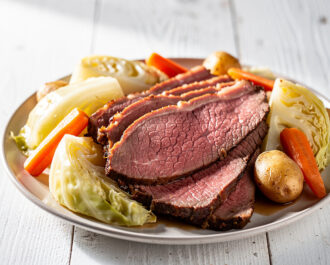
Here’s my “Aha!” moment I wish I’d known years ago: let the cooked corned beef rest before slicing. I used to attack it straight from the pot, and it would shred and fall apart. If you let it rest on a cutting board, tented with foil, for a good 15-20 minutes, the muscle fibers relax and reabsorb their juices. When you slice it across the grain, you’ll get beautiful, neat, melt-in-your-mouth pieces instead of a pile of delicious rubble. It’s a small step with a huge payoff in presentation and texture.
Serving & Pairing: Think Beyond the Pot
This dish is a hearty meal all on its own, served right from the Dutch oven with a slotted spoon and plenty of grainy mustard on the side—I love a whole-grain or a spicy brown for that punch. For a truly transcendent pairing, pour a glass of the same malty stout or porter you used in the braise. The roasted notes and slight bitterness cut through the richness perfectly. Want an unexpected side? A simple buttered Irish soda bread or a bright, vinegary salad of shaved fennel and apple provides a fantastic crunchy, fresh contrast to all that savory warmth. For more hearty meal ideas, browse our recipe collection.
Variations & Substitutions for Every Cook
No dark beer? Use beef broth. Not a cabbage fan? Swap in wedges of Brussels sprouts for the last 20 minutes of cooking—they get delightfully caramelized. For a lower-carb version, you can replace the potatoes with turnips or rutabaga; they’ll take on the flavors beautifully. If you’re using a pre-brined corned beef brisket, be mindful of adding extra salt until you taste the broth at the end. For deep dives on the science of brining, check out Serious Eats.
Make-Ahead & Storage Wisdom
This corned beef and cabbage recipe is arguably even better the next day. Let the whole pot cool, then store it, covered, in the fridge. The flavors marry and intensify. Reheat gently on the stovetop. The meat and vegetables also freeze well for up to 3 months. My favorite leftover hack? Chop everything up, sauté it with a little butter, and make the most incredible hash, topped with a fried egg.
FAQs: Your Questions, Answered
Do I have to rinse the corned beef? Yes, please do. Rinsing it under cool water removes excess surface salt from the brine, giving you more control over the final seasoning of your broth.
Can I make this in a slow cooker? Absolutely. After the initial simmer on the stove to gently bring up the temp, transfer everything to a slow cooker on low for 7-8 hours, adding the vegetables in the last 2 hours.
What cut of meat is corned beef? It’s almost always a beef brisket—a tough, flavorful cut that becomes incredibly tender through the long, slow, moist cooking process.
So there you have it. A classic, but with the little tweaks that turn good into great. It’s a reminder that the best meals often ask for your time, not your expertise. Now, go put that pot on to simmer, pour yourself a little something, and let the magic happen. I promise, your kitchen will smell amazing, and your dinner table will be full of happy, satisfied people. Tell me how it goes in the comments!