
- Prepare the Ingredients

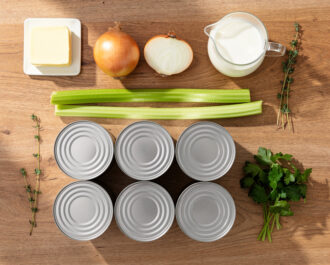
Gather your ingredients: 2 tbsp butter, 1/2 cup finely diced yellow onion, 1/4 cup finely diced celery, 2 (18.6 oz) cans of New England clam chowder, 1/2 cup clam juice or chicken broth, 1/4 cup heavy cream or whole milk, 1/2 tsp fresh thyme leaves, 2 tbsp chopped fresh parsley, and salt and black pepper for seasoning.
- Sauté the Aromatics
In a medium saucepan over medium heat, melt the butter. Add the diced onion and celery. Cook, stirring occasionally, until the vegetables are softened and fragrant, about 5-7 minutes. You want them to be translucent but not browned.
- Build the Soup Base
Pour in the two cans of clam chowder and the 1/2 cup of clam juice or broth. Stir well to combine with the sautéed vegetables. Bring the mixture to a gentle simmer over medium-low heat, stirring occasionally to prevent sticking on the bottom.
- Finish & Season
Once simmering, stir in the heavy cream or milk and the fresh thyme leaves. Heat through for another 2-3 minutes, but do not let it boil vigorously. Taste the chowder and season with salt and plenty of freshly ground black pepper to your liking.
- Serve Warm
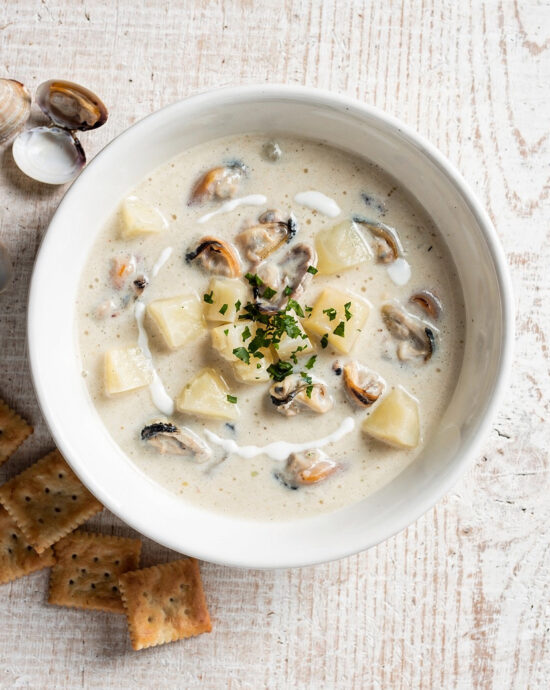
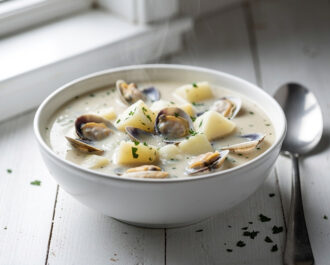
Ladle the hot chowder into bowls. Garnish generously with the chopped fresh parsley. Serve immediately with oyster crackers, crusty bread, or a simple green salad on the side.
- Calories:310 kcal
- Protein:9 g
- Carbohydrates:28 g
- Sugar:5 g
- Salt:1.1 g
- Energy:1297 kJ
- Fat:19 g
Sometimes, the craving for a bowl of creamy, briny soup hits hard. You want that taste of the coast, the comfort of a buttery, potato-laden spoonful, but you don’t want to spend your afternoon scrubbing clams. Let me let you in on my secret: a simple can. Forget everything you think about bland, salty tin-can soup; with a few additions, you can transform canned New England clam chowder into something that tastes deeply homemade. It’s a trick I use on busy weeknights when I want a taste of the Cape without the full culinary voyage.
The Whimsical Tale of Canned New England Clam Chowder
This creamy chowder has a history as rich as its texture. The story goes back to fishermen in the Northeast who needed a hearty, calorie-dense meal to sustain them through cold days on the water. They’d throw whatever they had—clams, potatoes, salt pork, ship’s biscuit—into a pot and call it supper. The genius of the canned version is that it captured that soul-warming essence for the homebound masses. While purists might scoff, I see it as a foundation, a beautiful blank canvas for your own creativity.
Why This Upgrade Works So Well
The magic is all in the finish. Most canned chowders get the basic flavor profile right—creamy, briny, starchy—but they often lack textural contrast and that final, fresh punch of flavor. The trick is to treat it not as a finished product, but as a concentrate. We’re going to amplify the good and fix the flat.
The Pro-Tip That Makes All the Difference
Don’t just dump and heat. My single best piece of advice is to sauté your own aromatics—onions and celery—in butter first. This one step creates a flavor base that no pre-cooked, shelf-stable soup can ever achieve. You’re building layers from the ground up. That initial sizzle releases essential oils and sweetness, infusing the final pot with a fragrant, savory depth that says “just made” instead of “just opened.” The canned soup provides the creamy body and clam essence, but this is how you make it yours.
Perfect Pairings for Your Chowder Feast
A bowl this comforting deserves the right company. Obviously, a pile of oyster crackers is classic, but have you ever tried a toasted baguette rubbed with garlic? It’s a game-changer. For a side, a bright, simple green salad with a sharp vinaigrette cuts through the richness perfectly. Drink-wise, you can’t go wrong with a crisp, unoaked Chardonnay or a cold lager. It’s also a fantastic starting point for our recipe collection of simple comfort meals.
Swaps & Twists for Every Palate
This base is endlessly adaptable. Want it smokier? Fry a strip of bacon in the pot before sautéing the veg. Need to lighten it up? Swap the heavy cream for half-and-half or whole milk. Craving more texture? Add some frozen corn in the last few minutes of heating. I’ve even thrown in a handful of fresh spinach at the end for a little color and nutrition. The beauty of starting with a can is the freedom to experiment.
Make-Ahead & Storage Smarts
Good news: this soup reheats beautifully. Let it cool completely, then store it in an airtight container in the fridge for up to 3 days. Reheat gently over medium-low heat, stirring frequently, and add a splash of milk or cream if it’s thickened up too much. I don’t recommend freezing the finished product, as the dairy can separate and the potatoes turn grainy.
Your Canned Chowder Questions, Answered
Q: Can I use any brand of canned clam chowder?
A: You can! Just aim for a brand labeled “New England” or “Creamy” style. I find the ones with fewer unrecognizable ingredients on the label tend to work best as a base.
Q: Is there a way to make this dairy-free?
A: Absolutely. Use a high-quality canned chowder (check the label for dairy), and finish it with unsweetened, unflavored oat milk or a rich cashew cream for body.
Q: My chowder is too thick. How do I thin it out?
A: No problem. Add a little clam juice (you can find it in cans or bottles), chicken broth, or even just a splash of milk or water until you reach your preferred consistency. Reheat gently after adding.
So, next time that craving for something warm and coastal hits, reach for that can with confidence. With a little sautéed onion, a dash of cream, and a sprinkle of fresh herbs, you’re minutes away from a bowl that’s far greater than the sum of its parts. I’d love to hear what twists you add to make it your own—drop a comment and let me know how it turns out! For more incredible deep-dives into technique, I always trust the team at Serious Eats.