
- Prepare the Ingredients

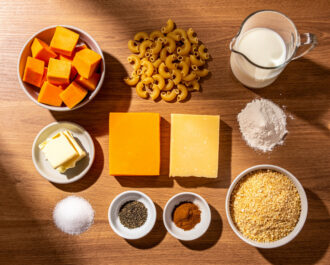
Preheat your oven to 400°F (200°C). Peel, seed, and cube the butternut squash into 1-inch pieces. You should have about 4 cups of cubed squash. Grate the sharp cheddar and gruyere cheeses. Measure out 12 oz of elbow macaroni, 1.5 cups whole milk, 3 tbsp unsalted butter, 2 tbsp all-purpose flour, 1 tsp salt, 1/2 tsp black pepper, 1/4 tsp ground nutmeg, and 1/2 cup panko breadcrumbs.
- Roast the Squash
Toss the cubed butternut squash with 1 tbsp olive oil, 1/2 tsp salt, and 1/4 tsp black pepper. Spread it in a single layer on a parchment-lined baking sheet. Roast for 25-30 minutes, stirring halfway, until the squash is very tender and caramelized at the edges.
- Cook the Pasta & Make the Sauce
While the squash roasts, cook the elbow macaroni in a large pot of salted boiling water according to package directions for 'al dente.' Drain and set aside. In a large saucepan or Dutch oven, melt the butter over medium heat. Whisk in the flour and cook for 1 minute until fragrant. Gradually whisk in the milk until smooth. Bring to a simmer, stirring constantly, until slightly thickened, about 3-5 minutes.
- Blend & Assemble
Transfer the roasted squash to a blender or food processor. Add about 1/2 cup of the warm milk mixture and blend until completely smooth and silky. Pour this squash puree back into the saucepan with the remaining milk mixture. Remove from heat. Stir in the grated cheeses, remaining salt, pepper, and nutmeg until the cheese is fully melted and the sauce is creamy. Fold in the cooked pasta until evenly coated.
- Bake & Serve
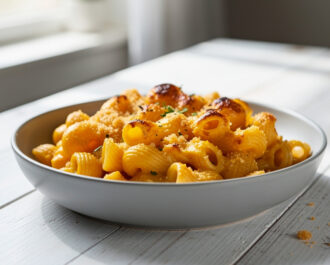
Transfer the saucy pasta mixture to a greased 9x13 baking dish. Sprinkle the panko breadcrumbs evenly over the top. Bake at 400°F for 15-20 minutes, or until the topping is golden brown and the edges are bubbly. Let it cool for 5 minutes before serving to allow the sauce to set slightly.
- Calories:450 kcal
- Protein:18 g
- Carbohydrates:52 g
- Sugar:8 g
- Salt:0.7 g
- Energy:1880 kJ
- Fat:22 g
There’s a moment every autumn when a craving hits—not just for any pasta, but for something deeply comforting, impossibly creamy, and vibrantly orange. That’s when my mind and my hands wander to this dish. I’m talking about making butternut squash mac and cheese, a recipe that transforms humble ingredients into a velvety, hug-in-a-bowl masterpiece.
The Origin Story of Butternut Squash Mac and Cheese
The classic macaroni and cheese is pure Americana, a dish of sustenance and celebration. Adding roasted butternut squash is a more modern twist, born from a desire for richer flavor and a sneaky dose of vegetable goodness. I discovered this version years ago at a cozy potluck, where its subtle sweetness and gorgeous color stole the show. It was legendary.
What Makes This Version Special
The magic lies in the texture and the layers. Roasted squash, blended until silky-smooth, becomes the base of the sauce. It creates a luscious body that clings to every nook of the pasta without needing a mountain of flour or a river of cream. The flavor profile is complex: a foundation of earthy, caramelized squash, a bold, vinegary punch from sharp cheddar, and a final whisper of nutmeg and black pepper that ties it all together. It’s the “why” behind the recipe.
Your Secret Weapon: The Squash Puree
This is the non-negotiable step. Roasting the squash until deeply caramelized is your flavor insurance policy. That golden-brown goodness gets blended into a velvet-smooth puree—this is what gives our dish its signature creamy body and allows us to cut back on heavy dairy without sacrificing an ounce of that decadent mouthfeel.
A Pro-Tip for Silky-Smooth Success
Temperature is everything. When you stir the cheese into the hot squash puree and milk mixture, take the pan off the heat. Adding cheese to a boiling sauce can cause it to seize up and become grainy. Off the heat, it melts gently, creating that perfect, emulsified sauce you see in professional kitchens. This one tip elevates your results from good to restaurant-worthy.
Serving & Pairing Ideas
Think beyond the dinner plate. This dish shines as the main event for a vegetarian supper, but it’s also a phenomenal side for a holiday table next to a herb-roasted turkey. For a drink pairing, a crisp, apple-forward cider cuts through the richness beautifully. An unexpected, perfect side? A simple arugula salad with a lemon vinaigrette for a bright, peppery contrast.
Variations & Substitutions
This recipe is wonderfully adaptable. For a gluten-free version, use your favorite GF pasta shells. Vegan? Swap the cheese for a store-bought vegan cheddar and use nutritional yeast for depth. Want more protein? Stir in a can of drained, rinsed white beans with the pasta—they’ll disappear into the creamy sauce. You can even swap the butternut for roasted sweet potato or pumpkin for a different seasonal twist.
Make-Ahead & Storage Tips
Busy weeknights, I see you. You can roast the squash and make the puree up to 3 days ahead; store it covered in the fridge. The assembled casserole can be refrigerated (unbaked) for a day, then baked straight from the fridge, adding 5-10 extra minutes. Leftovers reheat beautifully in a covered skillet with a splash of milk to bring the sauce back to life.
Frequently Asked Questions
Can I use frozen butternut squash? Absolutely. Thaw it completely and pat it very dry before roasting to drive off excess moisture and encourage caramelization.
My sauce seems a bit thick. Help? No panic. Simply whisk in a splash of warm milk or pasta water until it reaches your desired creaminess.
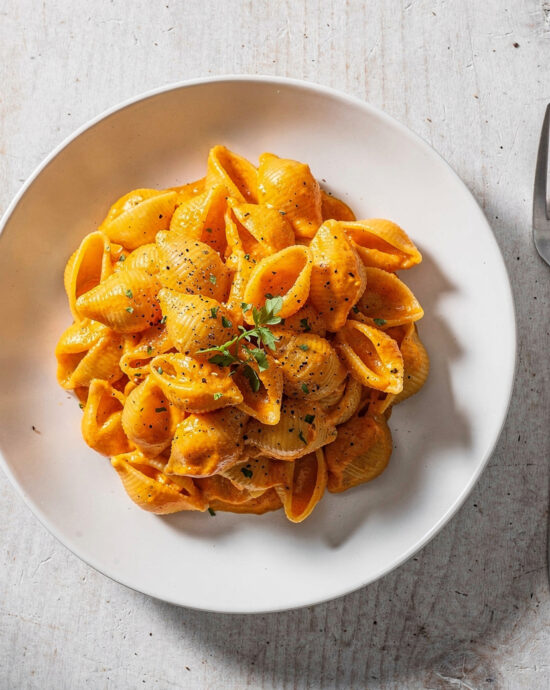
What’s the best pasta shape? I’m a shell person—they trap the sauce beautifully—but any short, sturdy shape like cavatappi or elbows works.
Finally, I want to leave you with this: the best kitchen discoveries often come from a simple twist on a beloved classic. This butternut squash mac and cheese is exactly that. It’s familiar yet exciting, comforting yet sophisticated. So, preheat that oven, put on some music, and get ready to create a new favorite. I can’t wait to hear how yours turns out. Let me know in the comments! For more fantastic deep-dives into technique, I always turn to the experts at Serious Eats.