
- Prepare the Ingredients & Fire

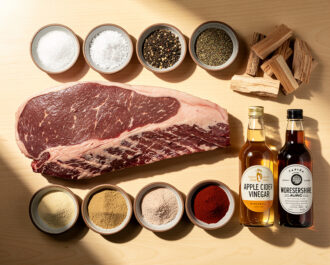
Gather your brisket, 1/4 cup coarse kosher salt, 1/4 cup coarsely ground black pepper, 2 tbsp garlic powder, 2 tbsp onion powder, 2 tbsp paprika, 1 bag of wood chunks, 1 cup apple cider vinegar, 1/2 cup Worcestershire sauce, and 1/2 cup water. Trim the brisket, leaving about 1/4 inch of fat cap. Combine all dry spices in a bowl to make your rub. Pat the brisket completely dry with paper towels, then apply the rub generously over the entire surface. Let it sit at room temperature for 1 hour while you prepare your charcoal or gas grill for a two-zone indirect fire, aiming for a steady 225-250°F. Add your wood chunks to the coals or a smoker box.
- Smoke & Develop the Bark
Place the brisket fat-side up on the grill grates over the indirect heat zone (away from the direct coals or flame). Close the lid. Maintain the temperature between 225-250°F, adding fresh coals and wood chunks as needed every 60-90 minutes to maintain consistent heat and smoke. Meanwhile, mix the apple cider vinegar, Worcestershire sauce, and water in a spray bottle. After the first 3 hours, begin spritzing the brisket lightly every 45 minutes to keep the surface moist and help the bark form. Let this process work its magic for approximately 6 hours.
- Wrap & Conquer the Stall
Once the internal temperature of the brisket reaches about 160-170°F and a dark, firm bark has formed, it's time to wrap. Carefully remove the brisket from the grill. Lay out a large sheet of heavy-duty aluminum foil or pink butcher paper. Place the brisket in the center and wrap it tightly, sealing all edges to trap the steam and juices inside. Return the wrapped brisket to the grill, still over indirect heat. Continue cooking until the internal temperature in the thickest part of the flat reaches 200-205°F and the meat probes like softened butter, which may take another 4-6 hours.
- Rest, Slice & Serve
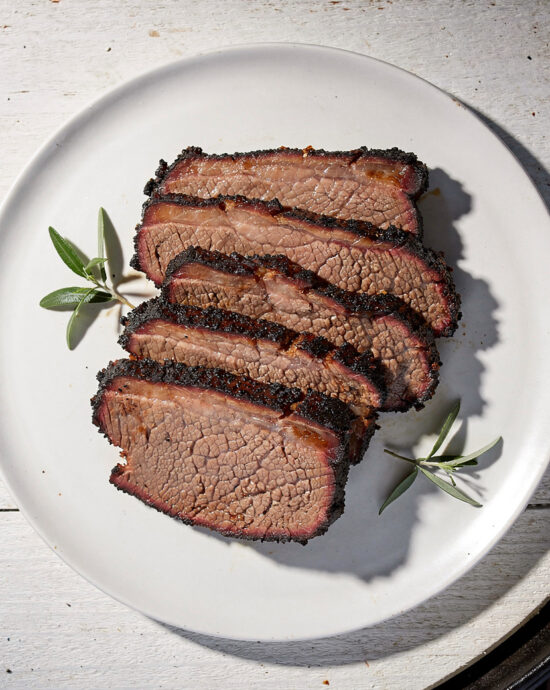
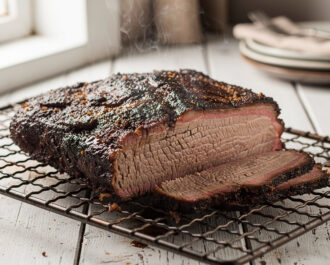
When the brisket hits the target temperature, carefully remove it from the grill. Do not unwrap it. Instead, place the entire wrapped package in an empty cooler or wrap it in towels and let it rest for a minimum of 1 hour, and up to 2 hours. This critical step allows the juices to redistribute evenly throughout the meat. When ready to serve, unwrap and place the brisket on a large cutting board. Slice the flat against the grain into 1/4-inch slices. For the point, you can slice it or chop it for "burnt ends." Serve immediately with your favorite barbecue sauce on the side.
- Calories:580 kcal
- Protein:68 g
- Carbohydrates:2 g
- Sugar:g
- Salt:2.1 g
- Energy:2427 kJ
- Fat:32 g
Every time I light the grill, that primal urge for wood-smoke and seared crust takes over. But nothing quite scratches that itch like a majestic slab of brisket on the grill. I’m not talking a rushed steak. I mean the long, slow ritual that transforms a tough cut into something legendary—juicy, impossibly tender, and infused with a bark that crackles with flavor.
From Trailside to Tailgate: The Story of Brisket
This is the food of American legend. The story goes that German and Czech immigrants brought their traditions of smoking tough cuts to the Texas Hill Country, where mesquite and post oak were plentiful. It was a perfect, thrifty marriage of old-world technique and new-world ingredients. The result? A slow-cooked masterpiece that became the beating heart of Texas barbecue, turning patience into a virtue and pitmasters into rock stars.
The Magic of a Two-Zone Grill
Most people think grilling is just direct, high heat. But the secret to this smoky triumph is the two-zone fire. You’ll push all your hot coals to one side, creating a blazing sear zone and a gentle, indirect cooking zone. This setup lets you build that gorgeous bark over the flames, then retreat to the cooler side to slow cook brisket grill style, coaxing out tenderness for hours without turning it to charcoal. As a result, you get the best of both worlds: bold, smoky flavor and a texture that yields to the gentlest tug of a fork. If you want to dive deeper into fire management, the folks at Serious Eats have some brilliant guides.
The Pro-Tip: Patience, Not Poking
My biggest lesson? Your thermometer is your best friend, but your instincts are its partner. Resist the urge to constantly open the lid and check on your masterpiece. Every peek releases precious heat and smoke, which extends your cook time. Trust the process and the internal temperature. Moreover, wrap the meat in butcher paper or foil once it hits the “stall” around 160°F—it helps push through that temperature plateau and keeps the juices locked in.
Serving & Pairing: Go Beyond the Bun
Sliced thin against the grain, this condiment is a revelation. Sure, it’s perfect on a soft bun with a dollop of tangy coleslaw. But for a next-level experience, try it alongside creamy potato salad sharp with dill, or even on a breakfast taco with scrambled eggs and a fiery salsa. The rich, smoky flavor pairs beautifully with a cold, hoppy IPA to cut the fat or a glass of spicy Zinfandel.
Variations & Substitutions
No two briskets are the same, and your style shouldn’t be either. For a Texas classic, stick with a simple salt-and-pepper rub. Feeling adventurous? Add brown sugar, chili powder, and coffee grounds to your mix for a deeper, more complex bark. You can absolutely adapt this for different diets: use a sugar-free rub for a keto-friendly version, or opt for a gluten-free Worcestershire sauce in your mop. The core technique remains the king.
Make-Ahead & Storage Wisdom
Honestly, the mixture is often even better the next day. Let it cool completely, then wrap it tightly and refrigerate for up to 4 days. Reheat slices gently in a 250°F oven with a splash of beef broth to keep them succulent. You can also freeze larger portions for up to 3 months—a lifesaver for future game-day feasts or busy weeknights.
Your Grilled Brisket FAQs
Q: How long does it really take to make brisket on the grill?
A: Plan for 1 to 1.5 hours per pound at 225-250°F. A full packer brisket can take 12 hours or more. It’s not a weekday quick meal; it’s a weekend project worth every minute.
Q: What’s the “stall” and how do I beat it?
A: The stall happens when evaporating moisture cools the meat, halting the temperature rise around 160-170°F. Wrapping the meat in butcher paper or foil at this point traps heat and steam, powering you through to tender perfection.
Q: Can I use a gas grill?
A> Absolutely! Create a two-zone fire by only lighting one set of burners. Use a smoker box or foil pouch filled with soaked wood chips (like hickory or oak) placed over the lit burner to generate that essential smoke.
So, there you have it. The path to legendary, backyard barbecue glory. The sauce isn’t just in the bottle; it’s in the smoke, the time, and the care you put in. Now, go fire up that grill, embrace the slow burn, and get ready for the most satisfying cook of your year. I’d love to hear how yours turns out—drop a comment below and tell me all about it! And if you’re looking for more inspiration, don’t forget to browse our recipe collection.