
- Prepare the Ingredients & Start the Farofa

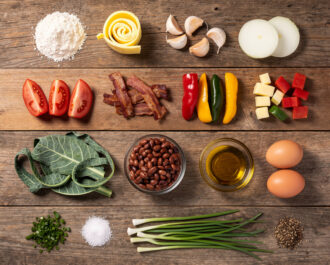
Gather all ingredients: 2 cups cassava flour, 4 tbsp butter, 3 minced garlic cloves, 6 oz diced bacon, 4 diced roma tomatoes, 1 diced white onion, 1 diced green bell pepper, 1/4 cup white vinegar, 1/4 cup olive oil, 4 cups cooked beans, 1 bunch sliced collard greens, 2 beaten eggs, and 1/2 cup sliced green onions. For the farofa, cook the diced bacon in a large skillet over medium heat until crisp. Remove bacon with a slotted spoon, leaving the fat in the pan.
- Toast the Farofa & Make the Vinagrete
Add the butter to the bacon fat in the skillet. Once melted, add the minced garlic and sauté for 30 seconds until fragrant. Reduce heat to medium-low and add the cassava flour. Toast, stirring constantly, for 5-8 minutes until the flour is evenly golden brown and smells nutty. Stir in the reserved crispy bacon, season with salt, and set aside. Meanwhile, in a medium bowl, combine the diced tomatoes, onion, and bell pepper. Whisk together the vinegar and olive oil with a pinch of salt and pepper, then toss with the vegetables. Set aside to marinate.
- Cook the Feijão Tropeiro Components
In the same (now empty) skillet used for the farofa, add a splash of oil if dry and heat over medium. Add the beaten eggs and scramble until just set. Remove and set aside. In the same skillet, add a bit more oil if needed and sauté the sliced collard greens for 2-3 minutes until bright green and slightly wilted. Remove and set aside.
- Assemble the Feijão Tropeiro & Serve
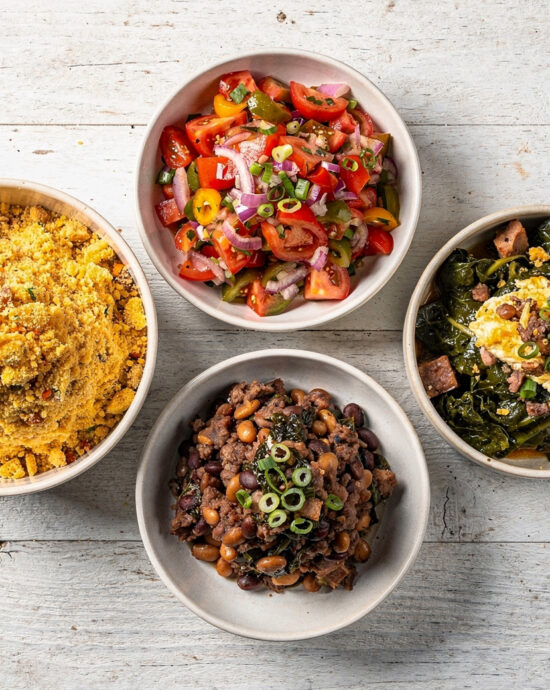
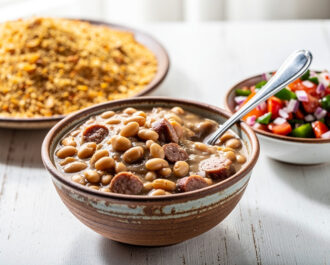
Return the skillet to medium heat. Add the cooked beans and warm through, mashing some lightly with the back of a spoon to create a creamy texture. Fold in the cooked collard greens and scrambled eggs. Off the heat, gently stir in about 1/2 to 3/4 cup of the prepared farofa, reserving the rest for sprinkling. Taste and season generously with salt and pepper. To serve, plate the feijão tropeiro, the vinagrete salsa, and a bowl of the remaining farofa. Encourage everyone to sprinkle farofa over their beans and meat.
- Calories:420 kcal
- Protein:18 g
- Carbohydrates:45 g
- Sugar:5 g
- Salt:1.2 g
- Energy:1757 kJ
- Fat:22 g
If you think a great steak or sausage is the star of the show, I used to agree—until I spent a summer in São Paulo. There, I learned that a meal’s soul is often found on the edges of the plate. The right accompaniments don’t just sit there; they sing, they crunch, they refresh, and they make every bite of that perfect picanha even more memorable. So, let’s talk about the unsung heroes: a trio of brazilian side dishes that are non-negotiable for any real churrasco, from a grand backyard grill-out to a simple Tuesday night.
The Building Blocks of Brazilian Side Dishes
Every culture has its holy trinity, and for the grills of Brazil, it’s a specific combination of texture and refreshment. This isn’t about complicated plating; it’s about bold, honest flavors that stand up to fire-licked meat. The goal? To create a harmonious plate where the creamy, the crunchy, and the bright all have a voice. This mixture cuts through richness, cleanses the palate, and adds its own irresistible character. No wonder the spreads at a traditional steakhouse are legendary.
Farofa: The Savory Crunch
Let’s start with farofa. Imagine toasted cassava flour, transformed with a sizzle of butter, garlic, and maybe crispy bacon or scrambled eggs. It’s not a side you eat by the spoonful, but a magical, crunchy condiment you sprinkle over everything. Its origin is practical, born from indigenous use of manioc, but its genius is universal. That dry, granular texture is the perfect counterpoint to juicy meat and saucy beans. It soaks up juices without getting soggy, adding a nutty, savory bite that is utterly unique and completely addictive.
Vinagrete (Brazilian Salsa)
Next, vinagrete. Don’t call it pico de gallo. While similar, this Brazilian salsa is diced finer and bathed in a simple, sharp vinaigrette of vinegar and oil. Tomatoes, onions, bell peppers, and sometimes a hint of hot pepper come together for a fresh, vinegary punch. This is your palate cleanser. A spoonful alongside a bite of rich, fatty side dishes for picanha is a revelation—it brightens the entire experience. It’s one of the simplest yet most essential brazilian side dish vegetables.
Feijão Tropeiro (Trooper’s Beans)
Finally, for something heartier, feijão tropeiro. This is a one-pan wonder with a cowboy’s spirit. Beans (often leftover), sautéed collard greens (couve), crispy bacon or torresmo (pork crackling), and—you guessed it—farofa, all tossed together. It’s a textural symphony: creamy beans, crisp greens, crunchy pork, and that toasty flour. It’s a meal unto itself but shines as the ultimate brazilian steak side dish.
The Pro-Tip: Toast Your Farofa with Patience
Here’s where most home cooks go wrong: they rush the farofa. You cannot simply warm cassava flour. You must toast it in fat (butter, bacon drippings, or oil) over medium-low heat, stirring constantly, until it turns a fragrant, golden sand color. This can take 5-8 minutes. Stop when you smell a deep, nutty aroma. Undercooked, it’s chalky; perfectly toasted, it’s transformative. This patience is the secret to authentic traditional brazilian side dishes.
Serving & Pairing Ideas: Build Your Brazilian Plate
Picture your plate: a slice of picanha or a chicken heart skewer, a scoop of creamy rice, a ladle of feijão tropeiro, a generous spoonful of vinagrete, and a sprinkle of farofa over everything. For drinks, a crisp, cold lager is classic, but a caipirinha cuts through the fat beautifully. For a lighter twist, serve these brazilian bbq side dishes alongside grilled fish or even as part of a vibrant vegetarian spread.
Variations & Substitutions for Every Kitchen
The beauty of these brazilian side dish recipes is their flexibility. For gluten-free, ensure your cassava flour is pure. Vegan? Use olive oil for farofa, skip the bacon in feijão tropeiro and use smoked paprika for depth, and make sure your vinagrete is plant-based. For brazilian vegetable side dishes, amp up the collards or add roasted carrots to the feijão. Exploring different side dishes for churrasco is part of the fun—maybe add a spicy potato salad or fried bananas.
Make-Ahead & Storage Tips
Vinagrete gets better after a few hours in the fridge (up to 2 days). Farofa is best made fresh but can be stored in an airtight container for a week and re-crisped in a pan. Feijão tropeiro components (cooked beans, crisped bacon, chopped greens) can be prepped ahead and quickly assembled before serving. This makes hosting your own churrasco surprisingly stress-free.
Frequently Asked Questions
What are the best side dishes for picanha? The classic trio is farofa, vinagrete, and a bean dish like feijão tropeiro or feijoada (on special occasions). They provide the essential contrast in texture and flavor.
Can I make these brazilian steakhouse side dishes without special ingredients? Absolutely! Cassava flour (for farofa) is key, but it’s increasingly common in international aisles or online. Everything else—tomatoes, onions, beans, collards—is a supermarket staple.
What’s the difference between farofa and breadcrumbs? Farofa is made from toasted cassava (manioc) flour, not wheat. It has a distinct, slightly granular texture and a nuttier, more robust flavor than breadcrumbs. It’s a seasoning, not just a coating.
So there you have it. These aren’t just sides; they’re the vibrant, essential counterpoints that turn grilled meat into a celebration. They’re the reason a meal feels complete. Now, grab your skillet, fire up the grill, and bring a taste of that Brazilian backyard to your table. I promise, once you experience that perfect bite of steak, beans, and crunchy farofa, you’ll never look at your plate the same way again. Let me know in the comments which of these brazilian side dishes you try first! For more grilling inspiration, check out the science of great barbecue over at Serious Eats.