
- Prepare the Ingredients & Brine

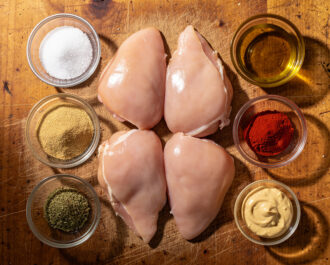
Pat 4 medium boneless, skinless chicken breasts (6-8 oz each) completely dry with paper towels. In a small bowl, mix together 1.5 tsp kosher salt, 1 tsp black pepper, 1 tsp garlic powder, 1 tsp paprika, and ½ tsp dried oregano. Sprinkle this seasoning mix evenly over all sides of the chicken. Place the chicken on a plate or small baking sheet and refrigerate, uncovered, for at least 30 minutes and up to 24 hours.
- Make the Flavor Paste
Preheat your oven to 425°F (220°C). In the same small bowl, combine 2 tbsp olive oil and 1 tsp Dijon mustard. Stir until it forms a loose, emulsified paste. Using a pastry brush or your fingers, coat the top of each brined chicken breast evenly with this oil mixture. No need to coat the bottom.
- Bake to Perfection
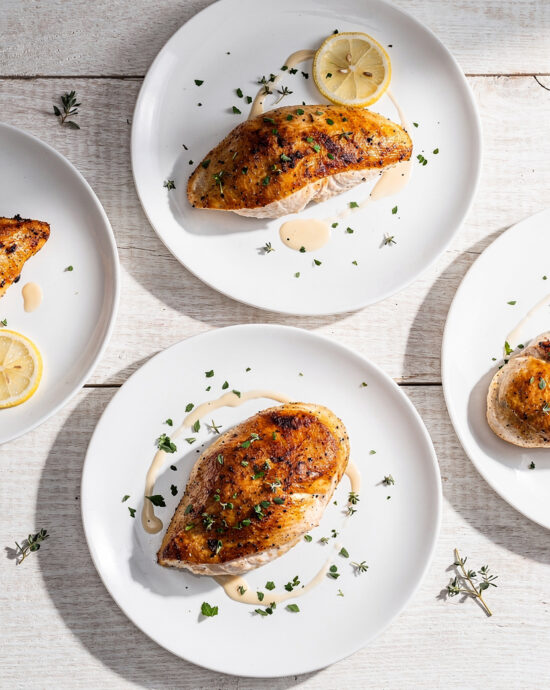
Place the chicken breasts, oil-side up, on a parchment-lined baking sheet or in a baking dish. Bake in the preheated oven for 15-20 minutes, depending on thickness. Start checking at 15 minutes with an instant-read thermometer inserted into the thickest part. The chicken is done when it reaches 160°F (71°C).
- Rest and Serve
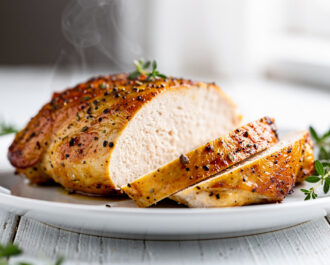
Immediately transfer the baked chicken to a clean cutting board. It’s crucial to let it rest, undisturbed, for 5-7 minutes. This allows the juices to settle, guaranteeing a moist result. After resting, slice against the grain and serve with your favorite sides.
- Calories:230 kcal
- Protein:35 g
- Carbohydrates:1 g
- Sugar:g
- Salt:0.9 g
- Energy:960 kJ
- Fat:9 g
You know the fear. The anxiety of pulling out a pan of parched, cardboard-dry poultry. Let’s leave that in the past. Today, we’re talking about baked chicken breast recipes, but not the boring, obligatory kind. I’m sharing my go-to method for achieving that holy grail: chicken so juicy you’ll think it’s a miracle, with a golden-crisp, flavor-packed crust that makes you want to eat right out of the baking dish. It’s a technique I perfected after one too many disappointments, and it hinges on one simple, brilliant trick.
The Story Behind the Simplest of baked chicken breast recipes
This method isn’t some ancient family secret passed down for generations; it’s born of modern frustration. After one particularly tragic dinner where I served what can only be described as savory cotton, I went down a rabbit hole. I read every food science article I could find, from the pages of Serious Eats to forgotten culinary textbooks. The result? A hybrid approach that combines the dry-brine wisdom of a roast with the quick-cooking ease of a weeknight staple. It’s become the foundation for my most reliable baked chicken breast recipes.
Why This Version Works Wonders
What sets this apart from other easy baked chicken ideas is its two-pronged attack on dryness. First, we use a generous dry brine—salting the meat ahead of time—which helps the proteins retain moisture during their hot oven stay. Second, and this is the real game-changer, we create a textured paste, not just a sprinkle of herbs. This paste (oil, spices, a touch of mustard) forms a protective, delicious barrier that bakes into a crackly crust, sealing in all those precious juices. The final texture is something special: a tender, almost shreddable interior with a shatteringly crisp exterior.
The Non-Negotiable Pro Tip for Perfect baked chicken breast recipes
Here’s the one tip that will change everything: Don’t skip the rest. I know, I know—you’re hungry. But after you pull those gorgeous breasts from the oven, you must let them rest on a cutting board for a full 5-7 minutes. This allows the frantic, heat-expanded juices inside to relax and redistribute. If you slice immediately, all that liquid will simply flood your cutting board. Patience here is the final key to juiciness in any of your baked chicken breast recipes.
Serving & Pairing: Think Beyond the Basic
This chicken is a glorious blank canvas. Slice it over a crisp, lemony kale salad for a light lunch. Cube it for grain bowls with quinoa and a tahini drizzle. My favorite? Shredding it into a warm, garlicky Alfredo sauce for the ultimate comfort pasta. For a drink pairing, skip the heavy red. A bright, citrus-forward Sauvignon Blanc or even a hoppy pale ale cuts through the richness of the crust beautifully. And for a surprising side, try it with a cool, crunchy jicama slaw.
Variations to Keep Things Interesting
The beauty of this master formula is its adaptability. For a Mediterranean twist, swap the paprika for za’atar and add lemon zest to the paste. Craving heat? Mix in a teaspoon of chipotle powder. Need it dairy-free? It already is. For a keto or low-carb version, simply enjoy it with a side of roasted broccoli or cauliflower mash. This flexibility is why it’s my foundation for countless baked chicken breast recipes.
Make-Ahead & Storage Wisdom
This dish is a meal-prep champion. You can dry-brine the chicken (Step 1) up to 24 hours in advance, covered in the fridge. Cooked and cooled, it keeps beautifully in an airtight container for 3-4 days. The texture is best when reheated gently—think a quick warm-through in a skillet with a splash of broth or a 30-second zap in the microwave covered with a damp paper towel. You can also freeze the baked and cooled chicken for up to 3 months.
Your Questions, Answered
Q: Can I use chicken thighs instead?
A: Absolutely! Thighs are more forgiving. Reduce the bake time by 5-7 minutes and use an instant-read thermometer to check for 165°F.
Q: My chicken is uneven in thickness. Help?
A: Great question. Before brining, place each breast between sheets of plastic wrap and gently pound the thicker end with a rolling pin or pan until it’s a fairly even ¾-inch thick. This ensures even cooking.
Q: Is an instant-read thermometer necessary?
A> I consider it the most important tool in my kitchen for proteins. It removes all guesswork. Pull the chicken at 160°F—the carryover heat will bring it to the safe 165°F as it rests.
So, there you have it. My foolproof path to chicken breast nirvana. It’s simple enough for a Tuesday, but impressive enough for casual company. I promise, once you try this method, you’ll look at that pack of chicken breasts in your fridge not with dread, but with delicious possibility. Now, go preheat that oven. I’d love to hear how it turns out for you in the comments!